
War Crimes
We have been here before

What is the definition of a war crime?
A war crime is a serious violation of international humanitarian law committed during armed conflict. It encompasses acts that are prohibited by international treaties and conventions, including the Geneva Conventions and the Rome Statute of the International Criminal Court.
Prosecution for war crimes requires the existence of an armed conflict and that the perpetrator was aware of the conflict (ICC, Elements of Crimes, § 8).--Cornell Law School
What does humanitarian law say about attacks on schools and hospitals?
The Geneva Conventions of 1949 and their Optional Protocols of 1977 (the main treaties of International Humanitarian Law – IHL) set a range of minimum standards for the conduct of hostilities. They are based upon the fundamental principle of distinction between civilians and other protected persons, on the one hand, and those who take part in hostilities (combatants).
The term “civilian” refers to individuals or objects (e.g., premises) that do not have a direct role in hostilities. An attack against a civilian person or object is therefore generally a violation of IHL and may constitute a war crime. . . This determination must however be unequivocal: when in doubt as to whether a school or hospital has become a military objective, there is a presumption that it retains its civilian status.
Even attacks against legitimate military targets must, however, follow two additional principles: 1) the principle of proportionality – whereby an attack that would cause incidental loss of civilian life, injury to civilians, damage to civilian objects, or a combination thereof, which would be excessive in relation to the concrete and direct military advantage anticipated, is prohibited (See Rule 14 of the Study on customary international law by the ICRC) – and 2) the principle of precaution in attack – which states that constant care must be taken to spare the civilian population, civilians and civilian objects. All feasible precautions must be taken to avoid, and in any event to minimize, incidental loss of civilian life, injury to civilians and damage to civilian objects (See Rule 15 of the Study on customary international law by the ICRC).
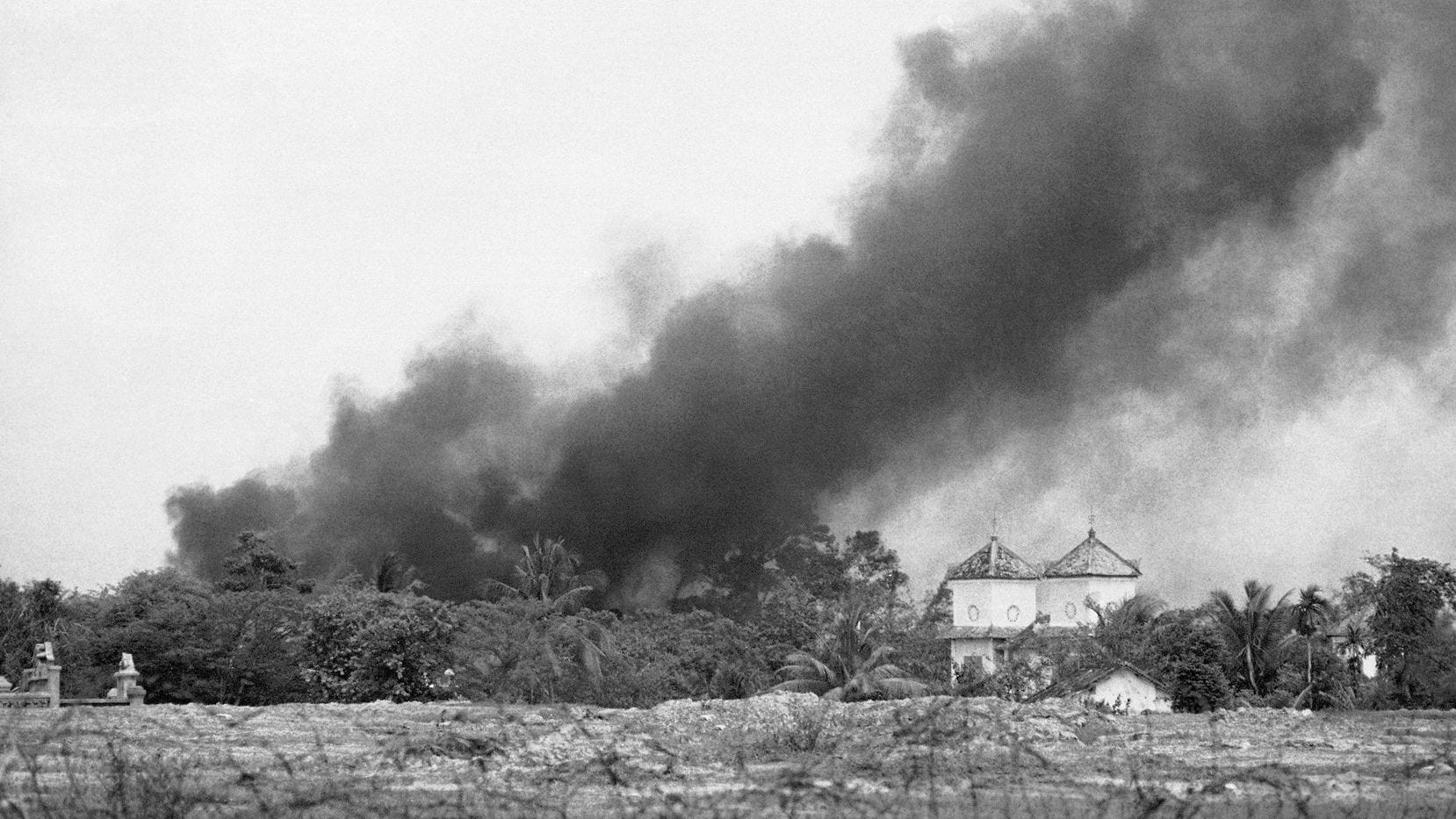
Smoke from a napalm bomb rises over a Trang Bang church. CNN.
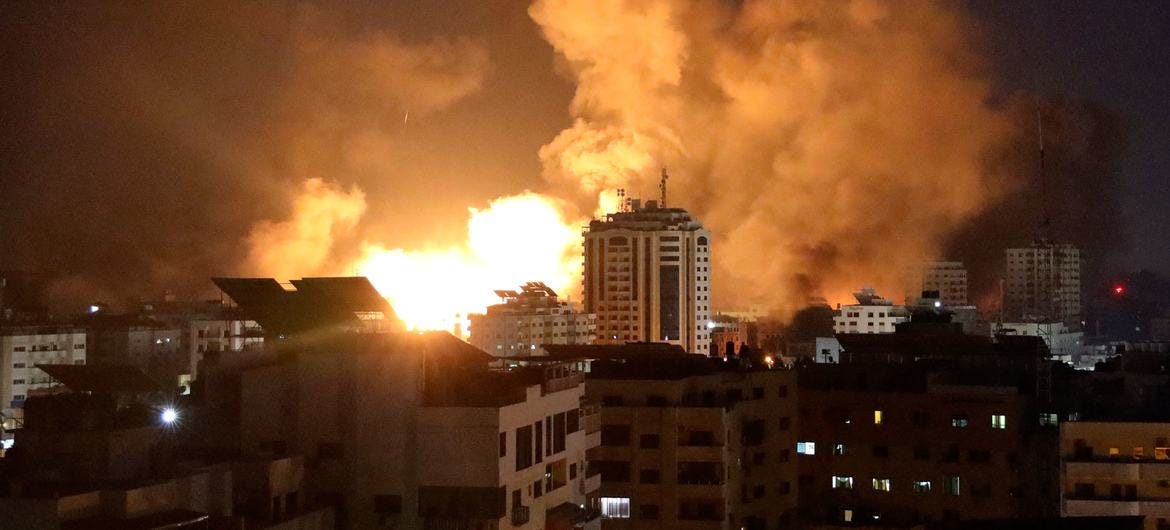
Israeli bombing of a Gaza hospital, Augusts 2025. UNICEF/Eyad El Baba
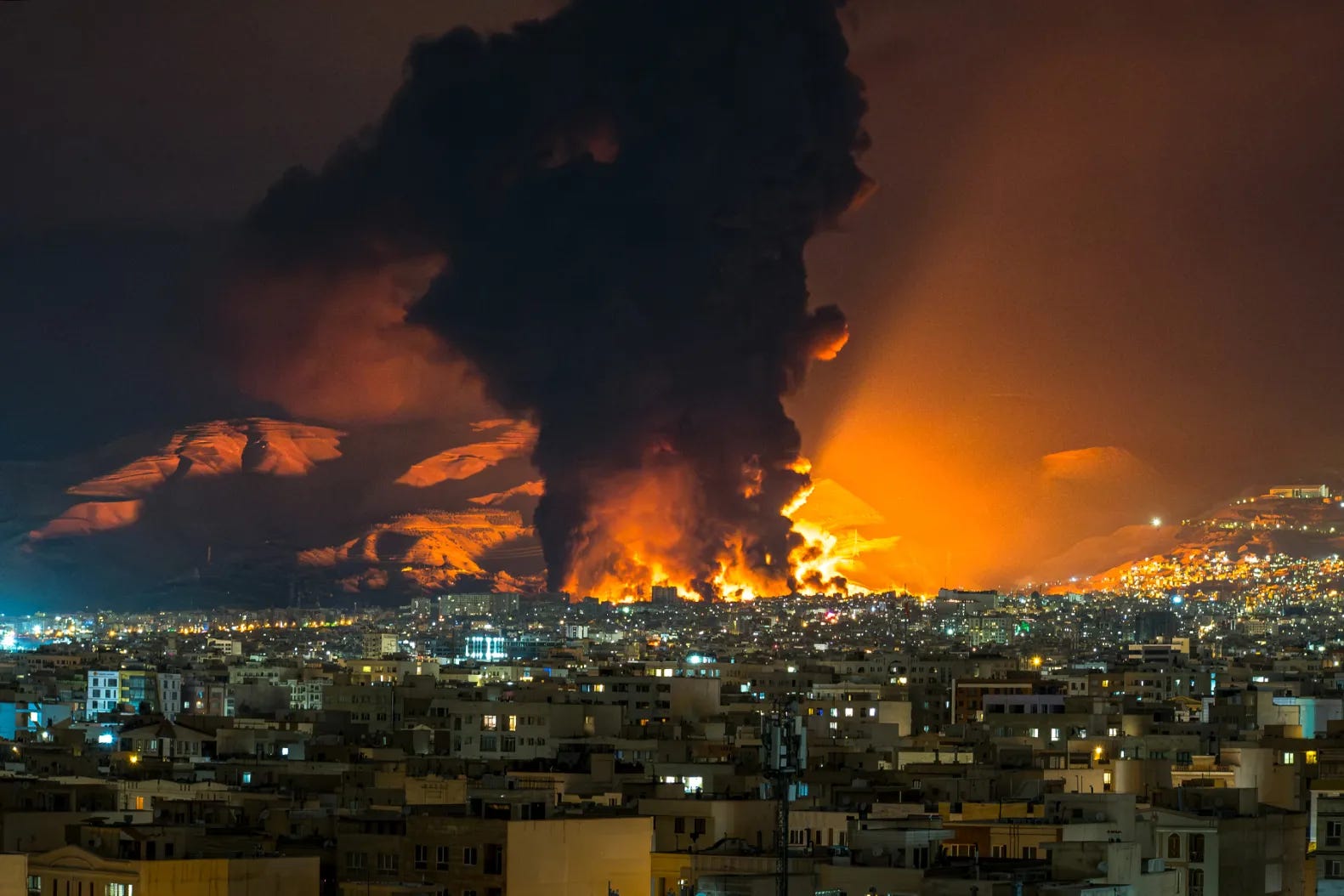
Smoke rises over Tehran, Iran following air strikes March 2026. Sasan Middle East Images/Getty Images
U.S.-Israeli strikes have already killed more than 1,200 civilians in Iran, including nearly 200 children, according to Human Rights Activists News Agency, a U.S.-based group that verifies casualties through a network in Iran

Son My Memorial to Civilians killed in Viet Nam War, Son My, Viet Nam.
Say their names. All 2 million of them.
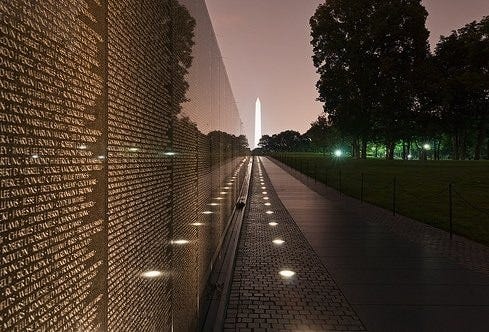
Viet Nam War Memorial Washington, D.C.
Say their names. All 58,276 of them.